Book Review Library
Book Reviews
The killing of senior Iranian figures, including claims involving Ayatollah Ali Khamenei in the early stages of conflict, has been interpreted by critics as part of a broader pattern in which assassination is used as an instrument of statecraft. Over recent years, Israel has been accused of repeatedly striking leadership structures within groups such as Hamas, Hezbollah, and the Houthis, where eliminated commanders are quickly replaced and then targeted again. Alongside high-profile figures, lower-level personnel connected to infrastructure and support functions have also been affected in various strikes, reinforcing the argument that individual targeting extends beyond purely military leadership.
The use of political assassination is often placed in a long historical continuum. Medieval groups like the Nizari Ismailis, commonly called the Assassins, are frequently cited as early practitioners. In modern history, the tactic appears in revolutionary movements such as the Socialist Revolutionaries in Russia, and later in militant Zionist organizations like Irgun and Lehi in pre-state Palestine, which carried out targeted killings of British officials and political opponents. Some of these figures later transitioned into formal political roles within Israel’s early state leadership, highlighting the blurred line between militancy and governance in this historical narrative.
In the contemporary era, scholars and journalists such as Ronen Bergman have described Israeli targeted killing operations as increasingly structured and institutionally coordinated, involving multiple intelligence and military branches. Over time, these operations are portrayed as having grown in scale and complexity, forming part of a long-term counterterrorism strategy rather than isolated incidents.
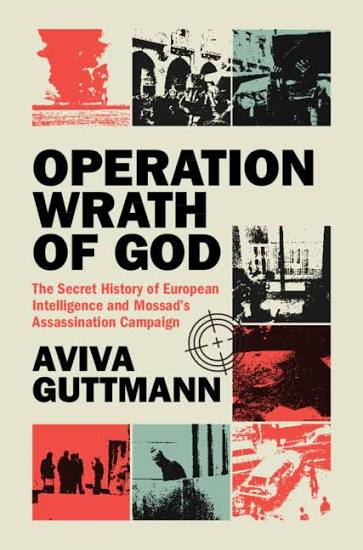
One of the most widely discussed examples remains the aftermath of the 1972 Munich Olympics attack by the Palestinian group Black September during the Munich massacre. Israel’s response, commonly known as Operation Wrath of God, involved a covert campaign across Europe targeting suspected perpetrators and planners. While it became emblematic of Israeli intelligence reach, it also included serious operational failures, most notably the mistaken killing of an uninvolved Moroccan waiter in Norway.
Accounts of this period also emphasize the role of international intelligence collaboration. Networks such as the Club de Berne facilitated extensive information sharing among Western security services. While this cooperation was primarily aimed at preventing terrorism, it also created situations in which intelligence used for surveillance and prevention overlapped with targeted killing operations, raising long-standing ethical and legal questions about indirect complicity.
Key Takeaways
1. Assassination is Framed as both Tactical and Structural: The review suggests it is not just occasional action but embedded within broader security doctrines and long-term strategy.
2. Historical Narratives are Used to Legitimize or Contextualize Modern Actions: By linking medieval, colonial, and modern examples, the discussion places present-day operations within a continuous tradition of political violence.
3. Blurred Boundaries Exist between Military, Intelligence, and Political Spheres: Individuals involved in early militant activity later appearing in state leadership illustrates how roles shift over time in conflict environments.
4. Intelligence Success and Failure are Tightly Interwoven: Even widely praised operations like “Wrath of God” are shown to include major intelligence errors that undermine operational precision.
5. Counterterrorism Networks can Create Moral Ambiguity: Systems designed to prevent attacks may also indirectly enable targeted killings, complicating accountability across international intelligence cooperation.