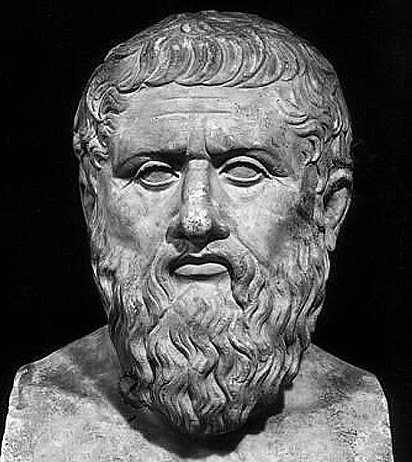
The Republic by Plato is a seminal philosophical work, primarily a Socratic dialogue concerning the nature of justice in both the individual and the ideal city-state (polis). Written around 375 BC, it uses the construction of a hypothetical utopian city, Kallipolis, as an analogy for the human soul to argue that a just life is superior and leads to true happiness.
Key features of Plato’s Republic include:
1. Dialogue Method: Plato’s dialogue method in The Republic is the Socratic Method., Socrates engages his companions (like Glaucon and Adeimantus) in conversation, challenging their definitions and beliefs about justice and happiness. Socrates examines concepts like justice, virtue, and reality, moving from initial assumptions to deeper understanding, often by building an ideal city in speech to understand the soul and ultimately reveal philosophical truths.
2. Justice (Dikaiosunē): The central question of the dialogue is “What is justice?”. Socrates refutes various definitions before proposing his own: justice is a state of harmony, both within the city (where each social class performs its function) and within the individual soul (where reason, spirit, and appetite are in balance).
3. The Ideal City (Kallipolis): To understand justice on a larger scale, Socrates builds a city in speech. This city is divided into three classes, i.e. rulers/guardians (philosopher-kings), auxiliaries/guardians, and producers.
4. The Theory of Forms: Plato argues that the world we perceive through our senses is a mere reflection of a higher, eternal reality composed of “Forms” (perfect ideas of concepts like Justice, Beauty, and Goodness). True knowledge is of these Forms.
5. The Allegory of the Cave: This famous allegory illustrates the philosopher's journey from a state of ignorance (prisoners seeing only shadows on a cave wall) to true knowledge (seeing the sun and the real world outside). It emphasizes the importance of education and the philosopher's duty to enlighten others.
6. Education: A rigorous and carefully censored education system is crucial for creating just citizens, especially the guardians and rulers, to ensure they are motivated by the good of the city and not personal gain.
7. Critique of Regimes: Socrates analyzes the decline of political regimes from the ideal aristocracy into timocracy, oligarchy, democracy, and finally, tyranny, arguing that the tyrannical regime and individual are the most unjust and unhappy.